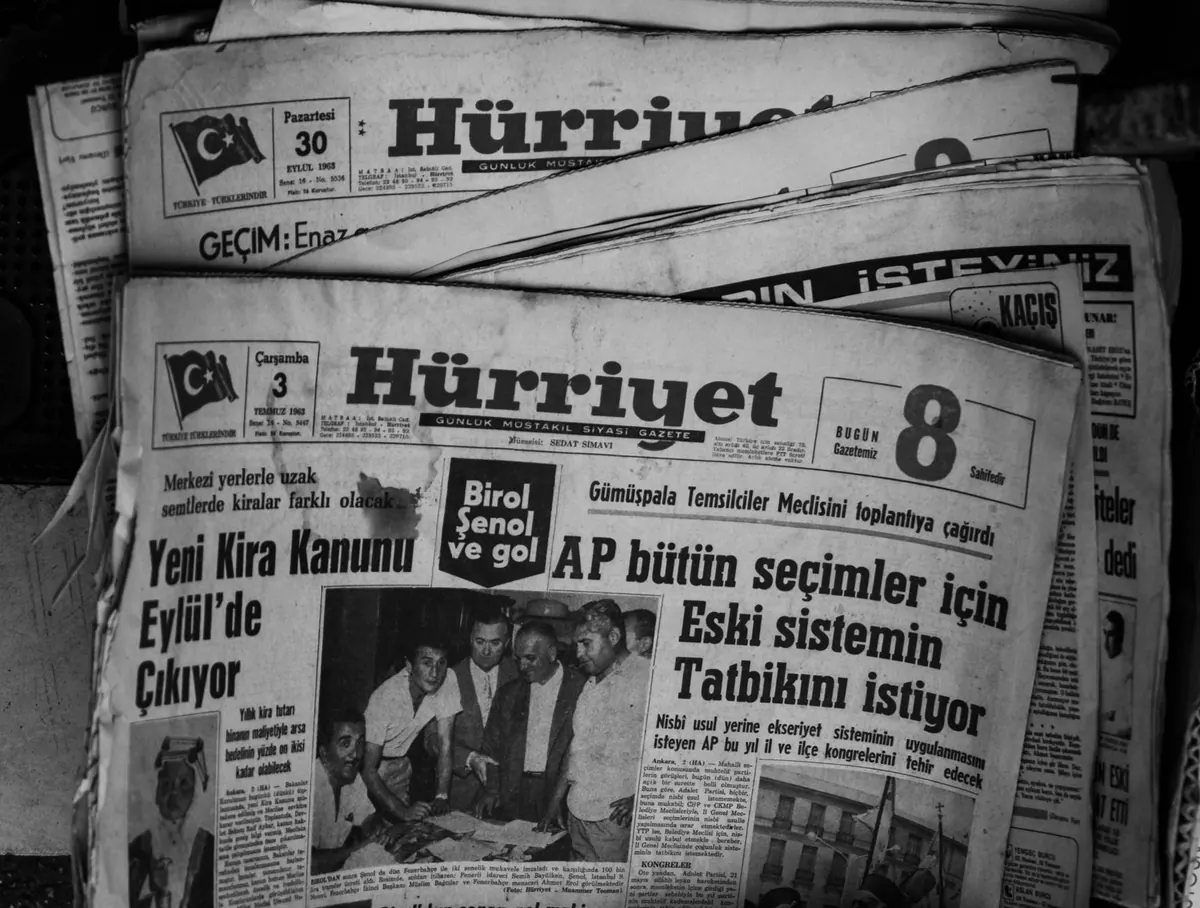
An old newspaper tells you two stories at once. The first is the one on the page: the shipping news, the murder trial, the speech in the parliament building. The second is quieter and usually more interesting, and it is written in the things that were removed, in a column that stops short, in a stamp on the masthead, in a pencil line through a paragraph that never reached the street.
Most people now read a historical newspaper through a single scan: one copy, one issue, one version of the day. That copy is often the exception rather than the rule. Editors stopped the presses, censors cut paragraphs after the forme was locked, publishers replaced whole leaves, and librarians quietly noted on the flyleaf that another copy existed with something extra. Finding suppressed text is less about luck than about knowing which of those layers to look at, and in what order.
Start With the Copy in Your Hands
Before you read a word of the text, look at the object. A single issue can survive in several states, and libraries usually catalogue them as one entry. Take note of the imprint line: morning or evening edition, city or country printing, price, issue number. A paper printed in two cities on the same day could carry different copy on page three, because the second plant pulled a paragraph that the first had already set.
Then handle it. Is one leaf slightly shorter than its neighbours, or on paper of a different tone? That is the classic signature of a cancel: a reprinted page substituted for the original before or after distribution. Look in the gutter for stubs where a page was razored out and another tipped in. Feel for a pasted slip over a column, especially near the top of a page, where an official notice would normally sit. If you are working from a scan, ask for the highest resolution the holding library has, and ask specifically whether the copy has any inserted or cancelled leaves. Many institutions record this in copy-specific notes that never make it into the catalogue record you found online.
Where the Censor Signs the Page
Official control usually leaves a mark of some kind, and those marks are a map. In some jurisdictions newspapers were submitted before printing and returned with an approval formula; in others they were seized afterwards, which is why one issue of a run can be rare and expensive while its neighbours are common. Wartime arrangements often added a further layer: a press bureau that issued official communiqués, required their use, and forbade independent reporting of certain subjects. Britain's arrangements under the Defence of the Realm Act in the First World War are a well-known example, and the paper trail they generated is exactly the kind of thing you can follow.
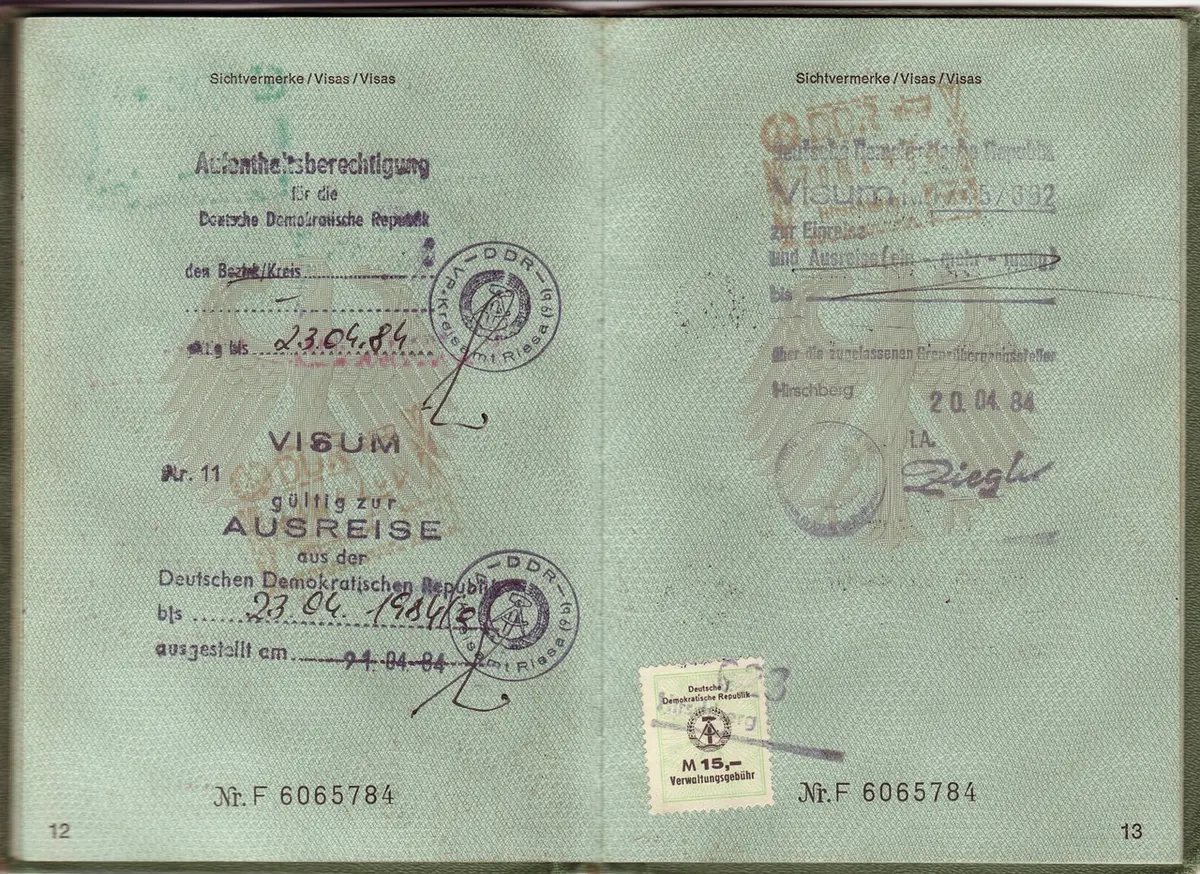
Learn to tell the stamps apart. A censor's permit number, a censor's initials, a bureau's date stamp, a newsagent's mark, a library's accession stamp and a revenue stamp all look like officialdom on a scanned page, and confusing them wastes weeks. French papers of the nineteenth century sometimes carried literal blank columns, the famous blancs, where an article had been pulled and nothing was set in its place; Italian papers under pre-publication review carried approval formulas; other papers simply ran a short paragraph noting that a report was "unavoidably held over". Each of those is a different kind of evidence and deserves its own note.
Follow the Printer's Paper Trail
The most productive sources are often not newspapers at all. Printers kept day books and ledgers recording how many copies of which edition were pulled and when. Publishers' archives hold correspondence with press bureaus, solicitors and advertisers. Proof copies survive in surprising numbers, and a proof with deletions marked in pencil or blue crayon tells you precisely what someone wanted gone, sometimes with the replacement wording written in the margin.
Legal deposit copies are worth understanding too, because timing matters. A copy lodged early may predate a late cut; a copy lodged after a stop-press correction may be the cleaned version. If two deposit libraries hold the same issue in different states, you have found your deletion without needing a single annotation.
Reprints and corrected editions
Be careful with anything labelled a reprint, a commemorative edition, or a "corrected" issue. Reprints were sometimes produced precisely to replace a damaged or embarrassing run, and the text was quietly tidied in the process. Collected volumes, anniversary histories and official accounts of a newspaper's own past are the most heavily edited of all. Read them as later testimony, not as the original record.
Read the Archive's Margins
Bound volumes carry the handwriting of everyone who handled them. A librarian's note reading "another copy in the Strong Room has the suppressed paragraph" is a gift. So is an index entry that points to an article you cannot find in the volume itself: the index was often compiled from the office file rather than from the bound copy, and it outlived the cut. Vertical files, cutting libraries and reporters' scrapbooks frequently preserve clippings that were never bound, and a clipping can hold the paragraph that a censor removed from the printed run.
Provenance is another lever. A volume that came from a censor's office, a police archive, or the desk of an editor tends to carry different marks than one donated by a family. Ask the rare books or special collections desk who owned the copy before the library did. The answer shapes how much you trust the handwritten notes.
A Comparison Routine That Works
Once you have two or more copies, work methodically rather than by eye. A routine like this one will save you a great deal of time:
- Fix the identity of the issue. Write down date, issue number, edition, imprint and price before you look at a single article.
- Collect at least three copies. Two is often not enough, because a single anomaly may be a printing fault rather than censorship.
- Align the pages, not the words. Compare column heights, running heads and the last line of each column, which is where a late cut shows first.
- Check the index against the text. Missing entries, or entries with no article beneath them, are strong leads.
- Read the seams. Look at the sentences immediately around a gap: filler items, agency copy, "we are requested to state", abrupt passives and unusual word spacing.
- Record who holds which state. Institution, shelfmark, date you consulted it, and whether the copy has inserted leaves.
The Typography of Deletion
Compositors worked by hand, and their hands betrayed them. When a word was pulled out of a locked forme, the survivors were spaced out to fill the measure, so an unusually loose line in the middle of tight setting is a small red flag. A line that jumps mid-sentence, a run of asterisks or dots where a name should be, a short rule drawn across a column, a paragraph that begins again after an awkward conjunction: these are the visible seams of a repair made under deadline.
Language carries its own traces. Phrases such as "we are not permitted to say more", "our correspondent's message is unavoidably held over", or a sudden shift into official communiqué style are not just stylistic quirks. They mark the boundary of what the paper could print. Note them even when you cannot recover the missing text, because a documented boundary is itself a finding.
Do not overlook the digitisation stage either. Scans are made from one copy, and microfilm reels are sometimes missing a page or cut off at the margin. A blank space on your screen might be a censored column, a damaged original, or a flaw in the filming. Check the physical copy before you build an argument on it.
Keeping a Dossier That Stands Up
Build a folder for each issue rather than each article. Inside it, keep a timeline of the publication's known control regime, a file of images at full resolution, and a short note for every difference you find, stating what you can prove and what remains a guess. Say "copy B lacks the final three lines of column two" rather than "the passage was censored" until you have a record that shows the cut was deliberate.
Then talk to people. Librarians who manage a run know its quirks better than any catalogue does, and a five-minute conversation about variant copies can redirect a week of work. Always confirm an archive's access rules, reproduction terms and any copyright restrictions before you publish images, and ask for permission in writing where the institution requires it. Suppressed text is recoverable more often than people expect, but only when the comparison is documented carefully enough that someone else can retrace your steps.
Photo: Diyadin Fahri / Pexels