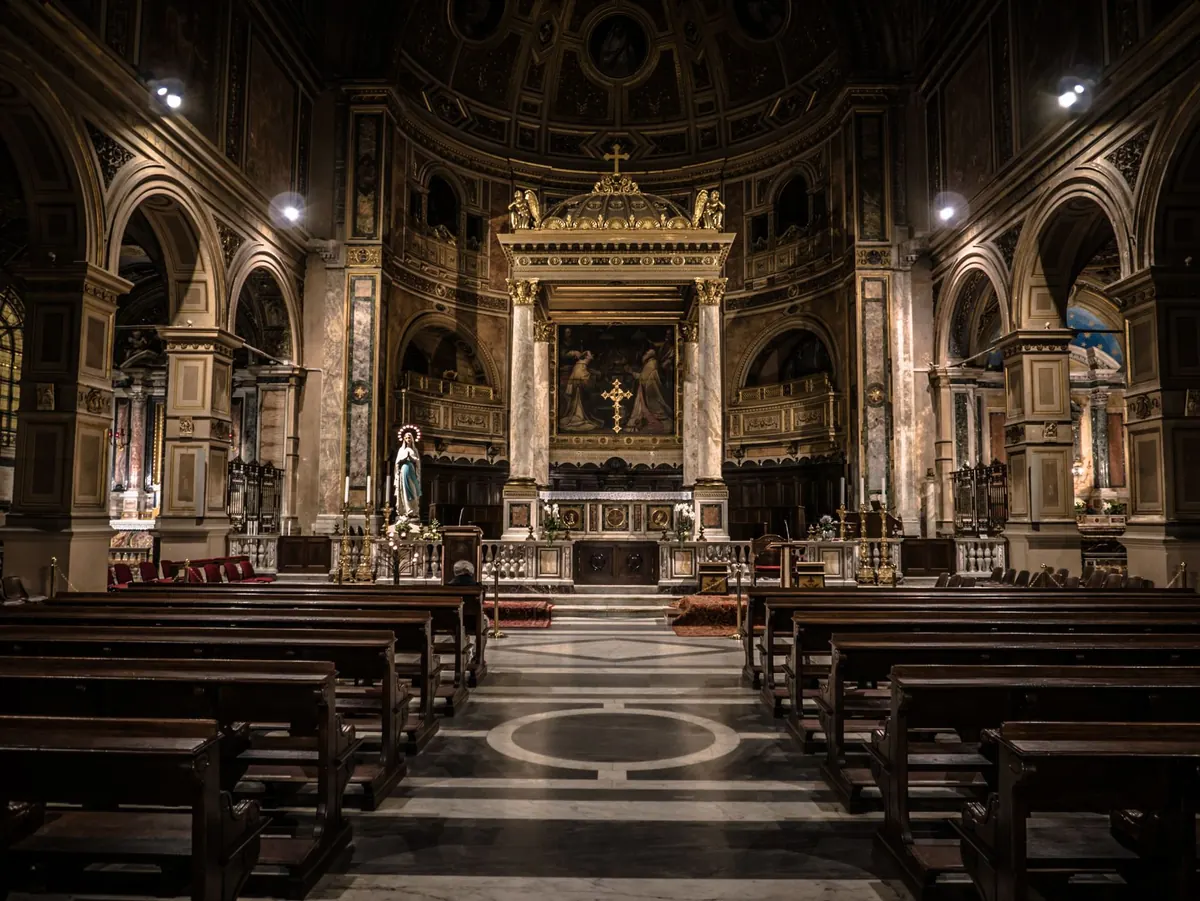
Summer looks like the obvious season for a research trip: long days, cheap flights, and the fantasy of a quiet reading room with the windows open. Italian parish archives rarely cooperate with that fantasy. Many close for August, keep two mornings a week the rest of the year, and answer email slowly — if at all. None of this should stop you. It just means the trip works better when it is planned backwards from the archive door rather than forwards from the airport.
Begin with the diocese, not the parish
Parish registers are ecclesiastical records, not public documents. The parish priest decides who sees them, and no law obliges him to hand you a 1743 baptism register on a Tuesday morning because you came a long way. Understanding that changes your approach.
The diocesan historical archive is usually the right first door. It often holds duplicates, marriage dispensations, pastoral visitation records, and — crucially — information about which parishes have deposited their oldest volumes there, especially where priests now serve several churches in a unità pastorale. Write to the diocesan archive before you write to any parish. Ask three things: whether the parishes on your list have material there, whether they require a letter of presentation, and whether they can send a short note of introduction to the parishes you plan to visit. That note is worth more than a dozen emails from a stranger.
The permission request that actually gets answered
Write in Italian, formally, and keep it under a page. Start eight to ten weeks before you travel; parish offices are not fast, and August swallows everything. If you have no reply after two weeks, telephone — in Italian, or with someone who speaks it. A polite call in the morning often produces in five minutes what three emails could not.
- Your full name, nationality and a scanned identity document.
- Your affiliation, if you have one — university, genealogical society, local cultural association.
- The precise subject: surnames with spelling variants, date ranges, and the types of register you need.
- Your dates in the area, and how many days you are asking for.
- A clear offer to pay reproduction fees and to respect whatever photography rules apply.
Attach a one-page scheda di ricerca summarizing the above. A priest can read that in thirty seconds between a funeral and a wedding. Be equally clear about limits: recent registers are normally restricted, and archives handle requests under privacy rules that vary from diocese to diocese. Ask what the cut-off is, accept the answer, and do not argue the point at the door. If your research touches living people, ask the archive directly how to proceed.
Reading the calendar: hours, holidays, and August
Diocesan reading rooms often open two or three mornings a week — say Tuesday and Thursday, nine to one — and close for a fortnight in August and around Easter. Parishes are less predictable: the priest's day off, catechism, school events and funerals all take precedence over your visit.
Avoid Sunday mornings and Saturday evenings entirely. Avoid the afternoon slot when the church is shut and everyone is eating. Do not plan anything for 15 August, and check the local patron saint's feast day, which can empty a town for three days. Confirm your appointment by phone the week before, then again the day before. In smaller centres, a call from the parish secretary to a neighbouring parish often opens a door you could not open yourself.
Etiquette in a sacristy
Dress as you would for a formal meeting in a warm country: shoulders and knees covered, quiet shoes, no beachwear. Greet the priest by name — Don followed by his first name is correct for most parish priests, Monsignore where it applies, Reverendo as a safe fallback. Introduce yourself in two sentences and hand over your paper.
Bring pencils, never pens, and never mark a volume. No flash photography, no scanner unless you have explicit permission, no rearranging the shelves, no licking your fingers to turn a page. If foam supports or a book cushion are provided, use them. Ask before photographing anything, and expect some archives to charge a small reproduction fee or to refuse images altogether. When you leave, a card and a small gift is right; a donation to the parish is often welcome, but offer it rather than pressing cash on someone who may have to refuse it.
An itinerary that survives contact with Italy
Two archives in one day is optimistic. One is realistic when travel is involved: a parish that looks twenty minutes away on a map can be forty minutes up a hill road, with the last stretch on foot through a centro storico closed to traffic. Cluster your visits geographically, keep the diocesan archive for your first two mornings, and leave a rest day in the middle. Do not book a flight home for the morning after a parish visit.
- Days one and two: diocesan archive, indexes first, ask which parishes hold what.
- Day three: the parish nearest your base, late morning, by appointment.
- Day four: the rural cluster, one parish only, with a backup call to the next.
- Day five: diocesan archive again, to fill gaps and check duplicates.
What to carry, and how to work once you are there
Take your passport, printed copies of every letter, a paper list of surnames and date ranges, pencils and a sharpener, a notebook, a power bank, cash for fees, and a jumper — stone churches stay cold even in July. Bring a magnifier if you struggle with faded ink.
Once seated, ask for the indice or repertorio before asking for volumes. Photograph index pages so you can work from them later, and record the exact archive name, volume, and page for every entry you use. Expect Latin formulas and difficult hands; figlio del fu Giovanni means Giovanni was already dead when the record was written, a small detail that reshapes a family tree. If a volume is missing, ask whether a duplicate sits in the diocesan archive. It often does.
A short checklist before you book anything
Confirm the diocesan archive is open on your dates. Confirm you have a named contact, not a general address. Confirm each parish appointment by phone twice. Confirm the photography and reproduction rules in writing. Have a backup parish for every day of the trip. And keep one afternoon free with nothing scheduled — that is usually when the best ledger turns up.
Photo: Pixabay / Pexels