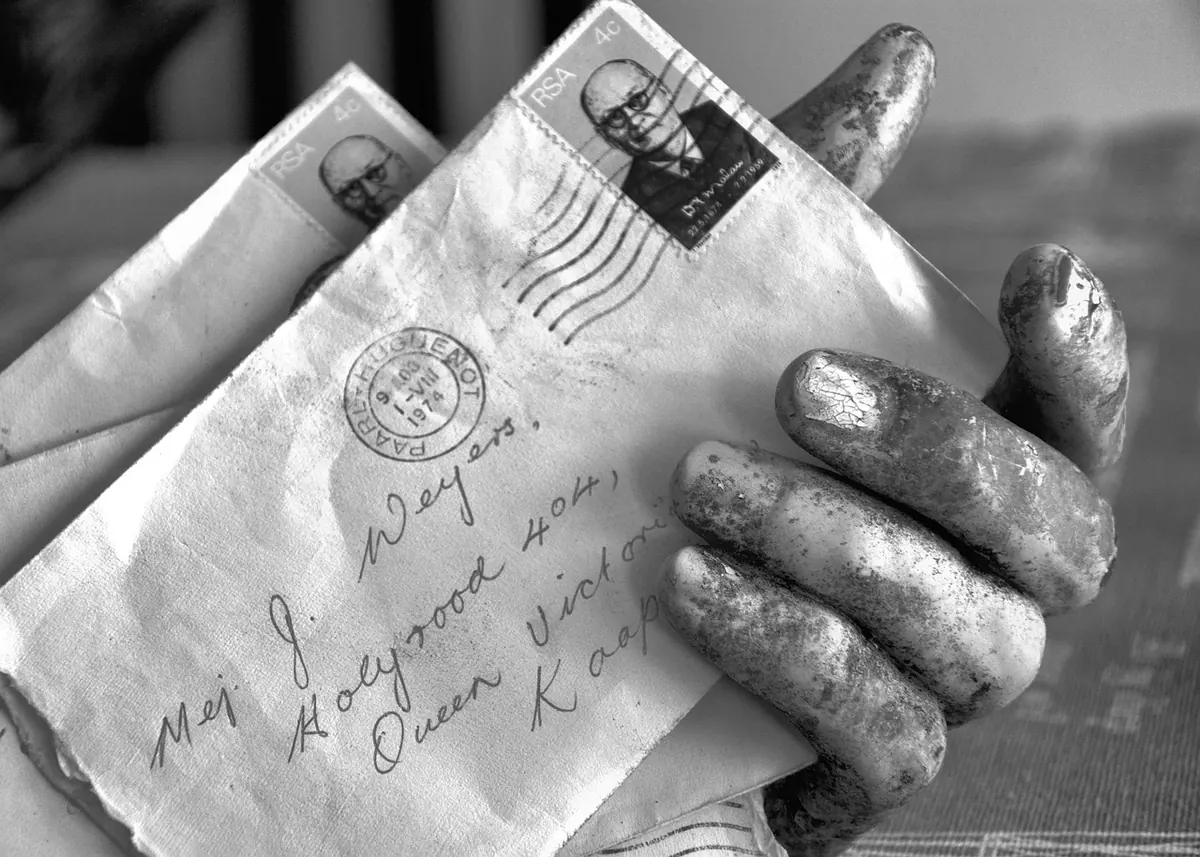
The first line usually goes quickly. Then you reach a will from 1642 where the testator's name is a hedge of loops, the ink has bled into the paper, and a small curl above a vowel seems to be standing in for two letters at once. Most beginners stop here and decide that old handwriting is a talent they were not given. It is not a talent. It is a set of habits, and the habits can be learned.
What follows is the working method: how to approach a document, which letterforms will mislead you, how scribes saved effort with abbreviations, what to do when the ink has gone grey, and how to keep your transcript honest.
Read the Document Before You Read the Words
Before you attack a single letter, work out what kind of document you are holding. A will, a charter, a parish register entry, a probate inventory, a court roll and a private letter each have their own architecture, and that architecture is a scaffold you can lean on.
Wills in English usually open with a religious formula and then identify the testator by name and place: In the name of God, Amen. Inventories move from room to room, listing beds, pewter, linen and livestock. Latin charters begin with a small group of set phrases — Sciant presentes et futuri, Omnibus ad quos — before the dispositive clause and the witness list. Register entries follow the sacrament: baptism, marriage, burial, each with a formulaic opening and the date in the margin.
This matters practically. Formulaic passages are free training. You get to learn how this particular scribe made an e, an r and a u on words whose meaning you already know, and only then turn to the variable parts: names, places, sums, dates. Also note the things around the text — marginal notes, signatures, endorsements, a second hand adding a date years later. Those are often in a different script and will confuse you if you assume one writer.
The Alphabet Doesn't Hold Still
Modern readers expect one shape per letter. Historical hands rarely oblige. A few habits cause most of the trouble:
Long s. Until the late eighteenth century, s at the start or middle of a word was often written like an f with no crossbar. Husband looks like Hufband. The short s survives at the end of words, so the same letter appears twice in sisters in two different shapes.
u, v, i, j, y. These were largely interchangeable in earlier hands. Read by context, not by shape: vpon, iudge, ioyner. A y with a dot or a curl is often an i; a u at the start of a word is often a v.
Thorn and the "ye" trap. A letter that looks like a y with a small e above it is not "ye" but the. The same letter alone stands for that or thou. Transcribe it as it appears, then expand it — never silently.
Secretary versus italic. The looping, angular "secretary" hand of English Tudor and Stuart documents is a different animal from the rounded continental italic that eventually displaced it. Learn which one you are looking at before you learn its letters. It helps to keep a printed alphabet of the relevant hand beside you and to copy shapes by hand; drawing a letter fixes it in memory faster than staring at it.
The Minims Problem
A minim is a single short vertical stroke. In many hands, m is three minims, n and u are two, i is one. Written quickly, with the strokes joined, a word becomes an even row of humps, and in, ni, m, ui and un all look alike. Scribes knew this, which is why many of them dotted their is and finished an n with a small flick of the pen while leaving u open at the top.
The practical remedy is counting plus context. Count the strokes carefully under good light. Then ask what the word must be: Latin endings such as -ibus, -orum, -imus narrow the options, and so does the surrounding English. Read the sentence aloud; the ear often settles a word the eye cannot.
Abbreviations: Nothing Wasted, Not Even a Curl
Abbreviation is systematic, not decorative. Scribes compressed words to save space on expensive material and time at the desk, and they did it the same way repeatedly. Learn a dozen marks and a page that looked hostile becomes readable.
A Field Guide to Common Marks
- A straight line or curl above a letter usually supplies a missing m or n: cū for cum, tēpus for tempus.
- A q with a mark above it is normally que; a p with a stroke through the descender is usually per, par or por, depending on the word.
- Small letters written above the line carry endings: a superscript r, us, is or ur completes the stem below.
- A squiggle resembling a reversed 3 or an ampersand stands for et; Xp with a stroke is Christus, ihs is Jesus, nr with a bar is noster.
- In English records, ob. or obijt means died; dni is domini.
- Money follows the old shorthand: li. or l. for pounds, s. for shillings, d. for pence, with twelve pence to the shilling and twenty shillings to the pound.
Transcribe the abbreviation as written first, in your notes, and expand it in a second pass. If you expand while you read, you will eventually record an expansion the scribe never wrote, and you will not know afterwards which words were yours.
When the Ink Has Gone Grey
Iron gall ink fades to brown and then to a pale rust; paper and parchment cockle, stain and tear. A few low-risk techniques recover a surprising amount.
Light is the first tool. Move the document into daylight if the reading room allows it, or use a reading lamp at a low angle so the beam skims the surface. Raking light catches the slight ridge of a stroke and the texture of the parchment, which often reveals writing that flat light hides.
For digital images, photograph straight on, avoid the on-camera flash, and then work the file: convert to greyscale, push the contrast, and try each colour channel separately. Iron gall ink frequently sits in the blue channel while stains dominate elsewhere. If the document was written on thin paper, ink from the facing leaf may have offset onto it — worth checking, as the ghost sometimes reads more clearly than the original page. Note that you are looking at a mirror image.
Ultraviolet light can make faded ink fluoresce, but treat it as a last resort and a shared decision. Ask archive staff before using any lamp on a document, keep exposure short, protect your eyes, and never bring solvents, tape or correction fluid anywhere near a manuscript. If the document matters to your research, ask whether a conservation-quality image already exists.
Comparison Is Your Fastest Teacher
The single most efficient technique is to build your own alphabet from the document itself. Crop or sketch every letter you can read with confidence — from the date, from Anno Domini, from a formula, from a signature — and arrange the samples by letter. Within an hour you have a key to that hand rather than to old handwriting in general, which is what you actually need.
Then widen the comparison. If the same scribe wrote other pages in the same register or bundle, read those next; consistency of habit is your ally. Printed calendars and editions of the series can confirm a name or a date, but treat them as finding aids, not as transcripts — editors normalise spelling, and a normalised name can hide the very form you are arguing about.
Habits That Save You Hours
- Transcribe exactly what you see. Keep original spelling and capitalisation, keep line breaks, and resist the urge to tidy.
- Mark doubt instead of erasing it. Use square brackets for letters you supply and a question mark for a word you cannot settle. A flagged uncertainty is scholarship; a silent guess is a future error.
- Read the whole document once before you try to make sense of it. Comprehension often arrives at the second pass.
- Keep a running sheet of letterforms and abbreviations in your notes and add to it every session.
- Record the reference properly — repository, class mark, folio or page, date — while the document is in front of you.
- Stop while your eye is still fresh. Fatigue produces confident misreadings, which are worse than admitted gaps.
- Ask for a second opinion. Local record societies, county archivists and history groups are generous with this kind of help.
Start with a document for which a printed transcript already exists — a published volume of wills or churchwardens' accounts — and read the original alongside it. Nothing teaches the shapes faster than watching your own reading converge on a text you can check. When you find yourself reading the sense rather than the strokes, you have stopped deciphering and started reading, which is where every paleographer ends up.
Photo: Agnali / Pixabay